Bowel Cancer Research
With bowel cancer the fourth most common cancer in Australia, more research is essential to improve diagnosis, treatment and management of the disease. While people over 50 are most at risk of bowel cancer, it is on the rise among young Australians.
Bowel cancer (also known as colorectal cancer) affects 15,500 men and women in Australia each year.
The good news is the National Bowel Cancer Screening Program is helping reduce the burden of bowel cancer.
Sadly though, half of all bowel cancer diagnoses will spread to the liver, where it is often unresponsive to current treatments. That is why more research is needed to tackle this deadly disease.
From advancements in early detection, to advancements in genetics and personalised treatments, Australian researchers have made significant contributions to understanding the role of diet, lifestyle, and immunotherapy in preventing and treating bowel cancer, while participating in impactful clinical trials and global collaborations.
We need more bowel cancer research funding to improve the bowel cancer survival rate and save lives.

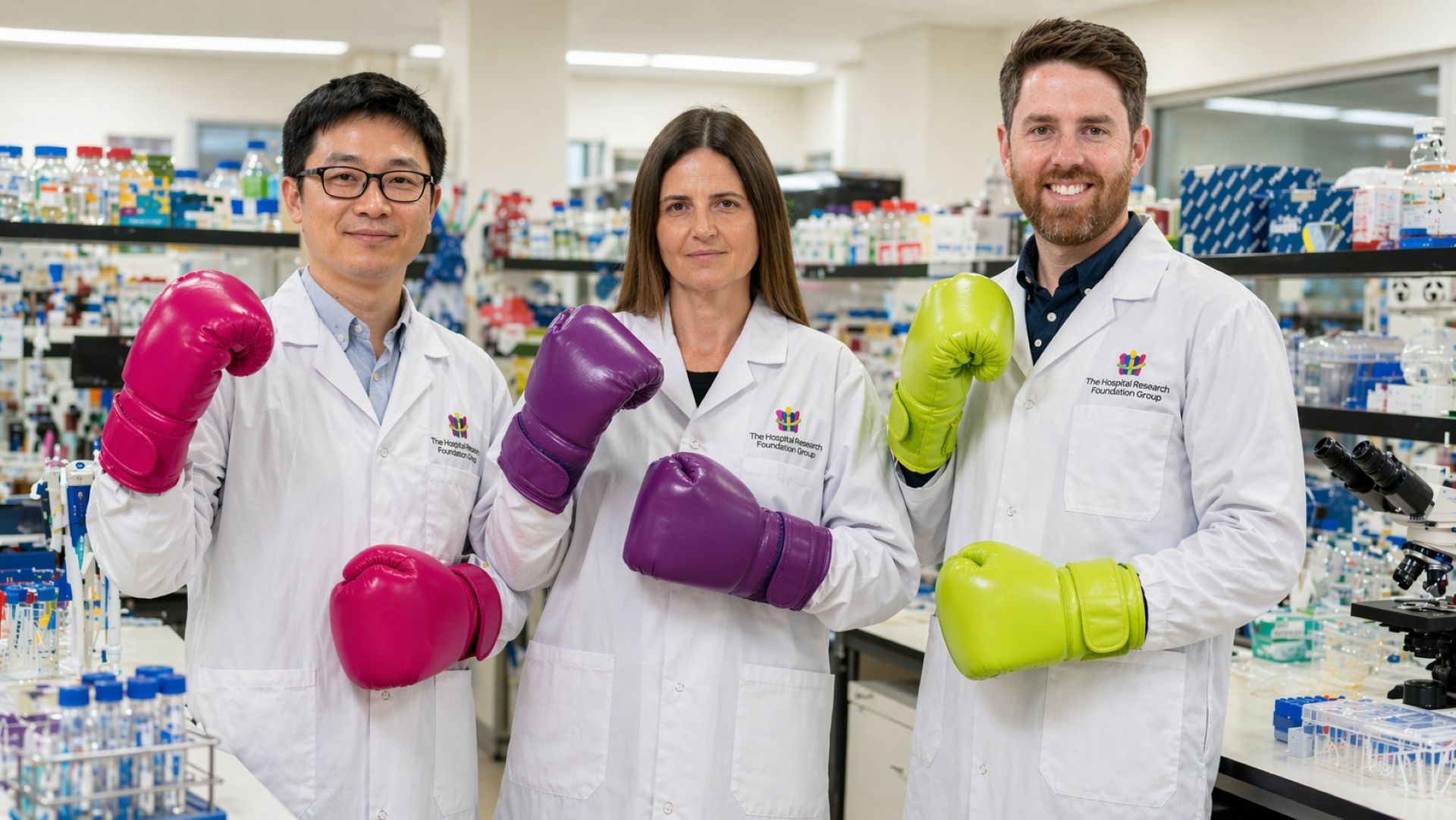
As a fundraiser of The Hospital Research Foundation (THRF) Group, we are excited to announce that the Group is giving $500,000 in funding for two research projects that aim to revolutionise the diagnosis of bowel cancer and fast-track their progress to human trials.
These ground-breaking South Australian-based projects received the funding after a competitive grant application process.
The funding has been made possible thanks to The Hospital Research Foundation Group’s generous donors, fundraisers from events like The Longest Table, corporate partners and ticket buyers in the Hospital Research Foundation Home Lottery.
See a summary of the projects below:
Associate Professor Erin Symonds – detecting bowel cancer risk
Flinders University | Flinders Medical Centre
This project aims to introduce a new faecal test to determine which individuals should be prioritised for urgent colonoscopy. With large demand for public hospital colonoscopies, but only 15% of people diagnosed with important clinical findings, this novel test (different to the at-home faecal tests) aims to better triage patients at higher risk of bowel cancer.
Associate Professor Susan Woods – bowel cancer screening
The University of Adelaide | SAHMRI
This funding will fast-track the development of a novel probiotic pill to diagnose bowel cancer. If successful, our approach aims to move away from the faecal based testing we use now, to hopefully improve participation rates in bowel cancer screening programs and increase the number of bowel cancers that are detected early.